Objects that open the right step
An NFC tag, a QR code or an RFID tag on an object can open a guide, record a shift or count equipment. First we decide what has to happen; then we choose the object, the tag and the system behind it.
When it helps
- A tap should open the right context.
- NFC or QR in a puck, badge, wristband, label or keychain that opens a guide, a product, an event or a check-in.
- The team has to record every shift.
- NFC or QR check-in tied to a per-person authenticated record, with clock-in and clock-out.
- Shared equipment changes hands all the time.
- UHF RFID tags and readers that count many items at once and record loans and returns.
- A door needs access control.
- A secure credential with a compatible reader and controller. It's a different system from a tag that opens a page.
Concept studies
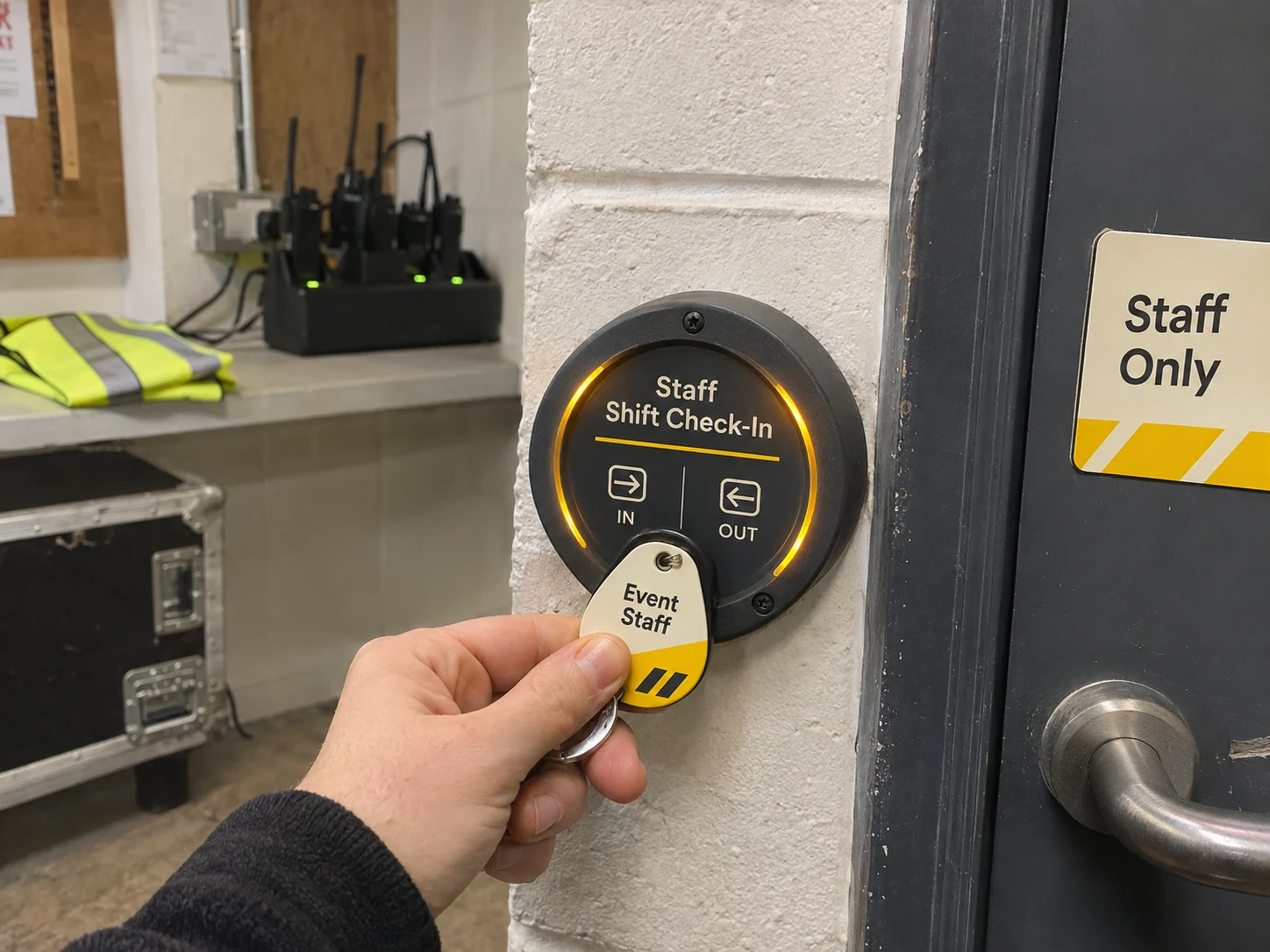
NFC shift check-in
Each person taps their phone on the way in and out, and the record stays under their name.
Generated concept. A valid record needs a per-person authenticated flow.
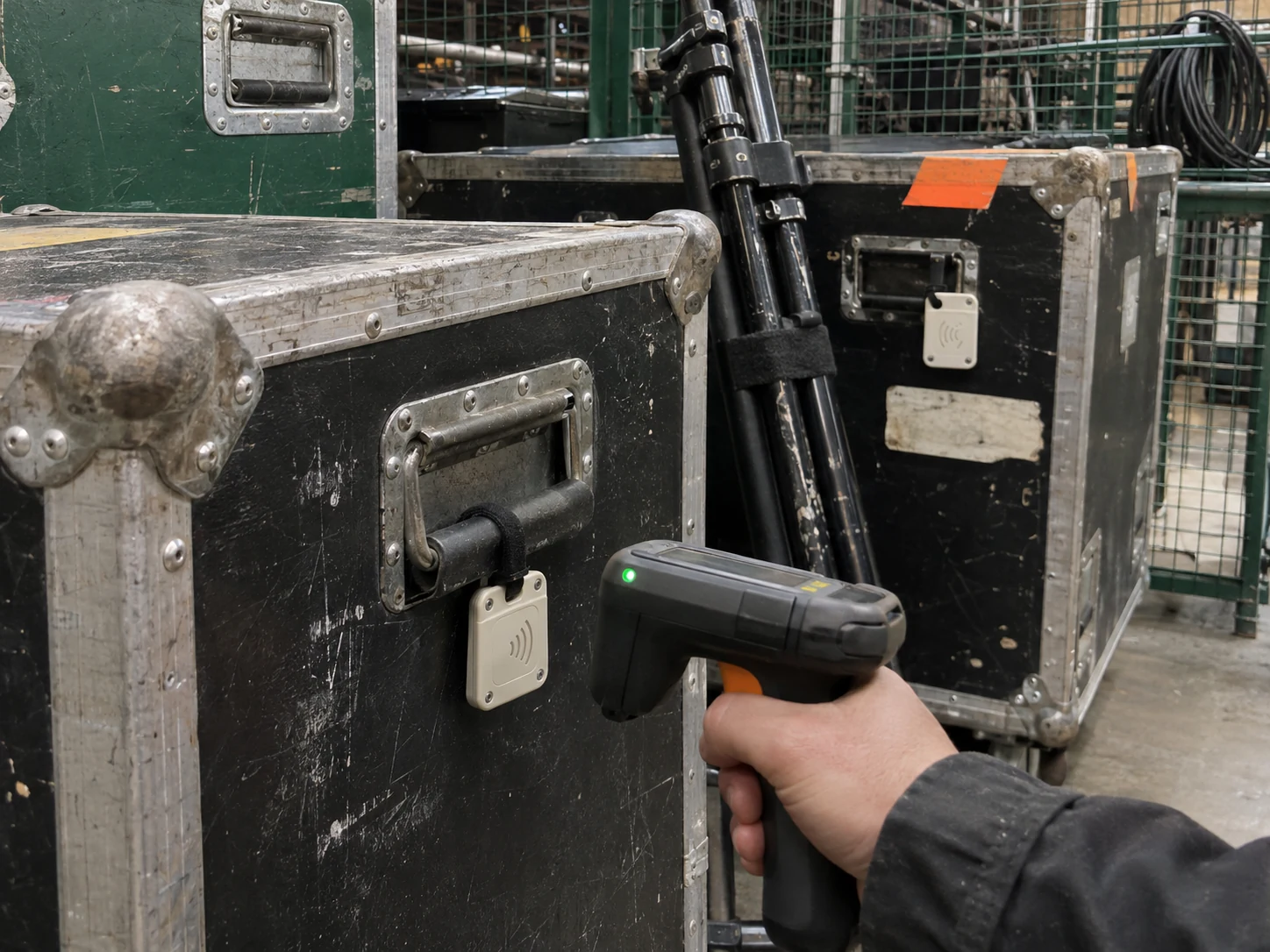
UHF RFID equipment tracking
Cases and equipment are counted as they pass a reader, without scanning them one by one.
Generated concept. Needs compatible UHF tags and readers.
What a tag can't do on its own
- A standard NTAG213 tag opens an address. It isn't a secure credential for opening doors.
- On recent Android, reading an NFC tag with a web address asks for a confirming tap, so a QR code is still needed.
- UHF RFID needs dedicated readers. A phone can't read it.
- Before manufacturing, we test the tag with the real phones at the place.
Have an object that should do something?
Talk to BUZO